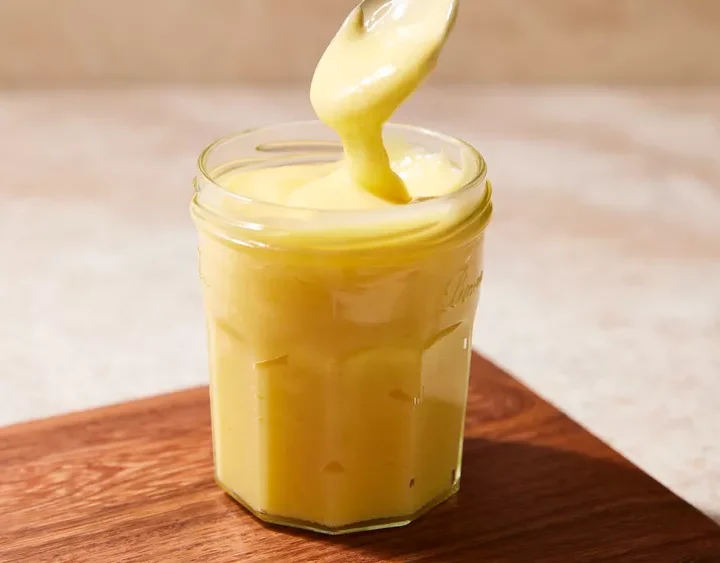
This Homemade Lemon Curd is silky, creamy, buttery, and packed with fresh lemon flavor. It comes together with simple ingredients and is perfect for spreading on toast, filling cakes and cupcakes, spooning over pancakes, or serving with fresh berries
The secret to smooth lemon curd is gentle heat and constant stirring. As a result, the eggs thicken beautifully without scrambling, while the butter gives the curd its rich, glossy finish.
Why You’ll Love This Lemon Curd
- Bright and fresh lemon flavor
- Smooth, creamy, and glossy texture
- Made with simple ingredients
- No complicated equipment needed
- Perfect for desserts, breakfast, and baking
- Can be prepared ahead of time
- Delicious warm or chilled
Recipe Details
Prep Time: 10 minutes
Cook Time: 10–15 minutes
Cooling Time: 1 hour
Total Time: About 1 hour 25 minutes
Servings: About 2 cups
Difficulty: Easy
Ingredients
- 4 large egg yolks
- 2 large whole eggs
- ¾ cup granulated sugar
- ½ cup freshly squeezed lemon juice
- 1 tablespoon finely grated lemon zest
- ¼ teaspoon salt
- 6 tablespoons unsalted butter, cut into small pieces
- ½ teaspoon vanilla extract, optional
How to Make Homemade Lemon Curd
Step 1: Prepare the Lemons
First, wash and dry the lemons well. Zest them using a fine grater, being careful to remove only the yellow outer layer and not the bitter white pith.
Next, squeeze the lemons until you have ½ cup of fresh lemon juice. For the smoothest curd, strain the juice to remove seeds and excess pulp.
Step 2: Whisk the Eggs and Sugar
In a medium saucepan, whisk together the egg yolks, whole eggs, and sugar.
Then, add the lemon juice, lemon zest, and salt. Whisk everything until the mixture is smooth and well combined.
Step 3: Cook the Lemon Mixture
Place the saucepan over low to medium-low heat.
Now, cook the mixture while stirring constantly with a whisk or silicone spatula. Make sure to scrape the bottom and corners of the pan as you stir.
After several minutes, the mixture will gradually begin to thicken.
Do not let it boil. Gentle heat is important because high heat can cause the eggs to scramble.
Step 4: Check the Consistency
Continue cooking until the lemon curd becomes thick enough to coat the back of a spoon.
If you have a kitchen thermometer, aim for approximately 170–175°F (77–79°C).
The curd will continue to thicken as it cools, so don’t worry if it still looks slightly loose while hot.
Step 5: Add the Butter
Remove the saucepan from the heat.
Next, add the butter pieces one at a time, whisking after each addition until completely melted and incorporated.
Then, stir in the vanilla extract if using.
The result should be smooth, creamy, and glossy.
Step 6: Strain for a Silky Texture
For an especially smooth lemon curd, place a fine-mesh strainer over a clean bowl.
Pour the warm curd through the strainer and gently press it through with a spatula.
This removes any tiny pieces of cooked egg or bits of zest.
Step 7: Cool
Transfer the lemon curd to a clean jar or airtight container.
Place a piece of plastic wrap directly against the surface of the curd to prevent a skin from forming.
Let it cool at room temperature briefly, then refrigerate until completely chilled.
As it cools, the curd will become noticeably thicker.
How to Use Lemon Curd
Once chilled, this homemade lemon curd is delicious in so many ways.
Spread it over:
- Toast
- English muffins
- Scones
- Pancakes
- Waffles
- Crepes
- Biscuits
You can also use it as a filling for:
- Cakes
- Cupcakes
- Tarts
- Cookies
- Donuts
- Cheesecakes
- Layered desserts
For an easy dessert, simply spoon chilled lemon curd over Greek yogurt and fresh berries.
Tips for Perfect Lemon Curd
Use fresh lemons. Freshly squeezed lemon juice gives the curd a much brighter flavor than bottled juice.
Don’t use high heat. Lemon curd needs gentle cooking. Too much heat can scramble the eggs.
Keep stirring. Constant stirring helps the eggs cook evenly and prevents the mixture from sticking to the bottom.
Don’t worry if it looks thin while hot. Lemon curd thickens considerably as it cools.
Strain it. Even if your curd looks perfectly smooth, straining it creates an extra silky texture.
Use unsalted butter. This gives you better control over the final flavor.
Add the butter off the heat. This helps create a smooth, glossy finish.
How to Tell When Lemon Curd Is Done
The easiest test is the spoon test.
Dip a spoon into the curd and turn it over. The curd should coat the back of the spoon instead of immediately running off.
You can also run your finger through the coating. If the line stays clear, your curd is ready.
Remember, it will become thicker after refrigeration.
How to Store Lemon Curd
Store homemade lemon curd in an airtight container or clean glass jar in the refrigerator.
Refrigerator: Up to 1 week
For the best flavor and texture, keep the container tightly covered and always use a clean spoon when serving.
Can You Freeze Lemon Curd?
Yes. Lemon curd freezes well.
Place completely cooled curd in a freezer-safe airtight container, leaving a little room for expansion.
Freeze for up to 3 months.
To use it again, thaw it overnight in the refrigerator and whisk gently before serving.
Recipe Variations
Meyer Lemon Curd
Use Meyer lemons instead of regular lemons for a naturally sweeter and slightly floral flavor.
Orange Lemon Curd
Replace part of the lemon juice with fresh orange juice for a softer citrus flavor.
Lime Curd
Replace the lemon juice and zest with fresh lime juice and lime zest for a tangy lime version.
Coconut Lemon Curd
Add a small amount of coconut extract for a tropical twist that’s especially delicious with cakes and cupcakes.
Frequently Asked Questions
Why is my lemon curd not thick?
It may simply need more cooking time. Continue cooking gently while stirring until it coats the back of a spoon. It will also become thicker once chilled.
Why did my lemon curd become lumpy?
The eggs may have cooked too quickly because of excessive heat. Straining the curd through a fine-mesh sieve can remove small lumps and restore a smoother texture.
Can I make lemon curd without butter?
Yes, although butter provides much of the rich, creamy texture and glossy finish. A butter-free version will have a lighter texture.
Can I use bottled lemon juice?
Fresh lemon juice is strongly recommended. Bottled juice generally doesn’t provide the same fresh, bright flavor.
Can I make lemon curd ahead of time?
Absolutely. In fact, making it ahead is convenient because the curd becomes thicker and easier to use after chilling.
Nutrition Facts
Approximate nutrition per 2-tablespoon serving:
- Calories: 105
- Carbohydrates: 10 g
- Protein: 1.5 g
- Fat: 7 g
- Saturated Fat: 4 g
- Cholesterol: 70 mg
- Sodium: 30 mg
- Sugar: 9 g
Nutrition information is an estimate and can vary depending on the exact ingredients and serving size.
Recipe details
Homemade Lemon Curd
Prep: 10 minutes
Cook: 10–15 minutes
Cooling: 1 hour
Total: About 1 hour 25 minutes
Yield: About 2 cups
Ingredients
- 4 large egg yolks
- 2 large eggs
- ¾ cup granulated sugar
- ½ cup fresh lemon juice
- 1 tablespoon lemon zest
- ¼ teaspoon salt
- 6 tablespoons unsalted butter, cubed
- ½ teaspoon vanilla extract, optional
Instructions
- First, zest and juice the lemons. Strain the juice if needed.
- Whisk the egg yolks, whole eggs, and sugar together in a saucepan.
- Add lemon juice, lemon zest, and salt, then whisk until smooth.
- Cook over low to medium-low heat, stirring constantly.
- Continue until the mixture thickens and coats the back of a spoon, approximately 170–175°F.
- Remove from heat and whisk in the butter piece by piece.
- Stir in vanilla extract if using.
- Strain the curd through a fine-mesh sieve for an extra-smooth texture.
- Transfer to an airtight container and cover the surface.
- Refrigerate until completely chilled and thickened.
- Serve over toast, pancakes, waffles, scones, cakes, yogurt, berries, or your favorite dessert.
Final Thoughts
Once you make this Homemade Lemon Curd, you’ll find plenty of excuses to keep a jar in the refrigerator. It’s bright, creamy, buttery, and wonderfully versatile. Whether you’re spreading it on warm toast or using it to fill a beautiful cake, this easy lemon curd adds a fresh burst of citrus flavor to almost any sweet treat.